Studying CS & IT in Australia: Courses, Career Scope, Skills & What to Expect
Choosing a Computer Science or Information Technology course is about much more than picking a degree title. A student searching for CS courses in Australia may encounter Bachelor of Computer Science, Bachelor of Information Technology, Software Engineering, Data Science, Cybersecurity, Artificial Intelligence, Information Systems and several related programs. At postgraduate level, the choices become even broader.
The better question is not simply which degree sounds attractive. It is: which area of computing matches the kinds of problems, technologies and career work that should be explored over the next several years?
Study Australia describes information technology and computing as a major field with specialisations including programming, data, systems analysis, robotics, artificial intelligence, cybersecurity, mobile computing, business information systems, computer forensics and other emerging technologies. It also highlights the industry relevance of Australian digital and technology courses. citeturn0search5turn0search9
This guide explains the major CS and IT courses in Australia, what students can expect to study, how specialisations differ, which skills matter beyond the syllabus, and what the career scope can look like. It is also useful background for searches such as CS Assignment Help Australia, Australia University Assignment Help, IT assignment help, programming assignment help and computer science project help because understanding the structure of a course makes individual assignments much easier to place in context.

1. Why Study Computer Science or IT in Australia?
Australia offers university and vocational pathways across a wide range of computing disciplines. Study Australia identifies IT and computing as a field with many specialisations, including AI and machine learning, data science and analytics, cybersecurity, mobile computing, business information systems, computer forensics and advanced ICT. citeturn0search5
A major advantage is breadth. Computing is not one career. A graduate can move towards software development, software engineering, cybersecurity, data science, artificial intelligence, cloud computing, networking, database administration, systems analysis, business analysis, IT infrastructure, consulting or research.
Another advantage is that technology is not limited to technology companies. Digital systems are used in banking, healthcare, government, education, agriculture, manufacturing, logistics, telecommunications and professional services. Study Australia notes that IT and computing skills are relevant across many global industries. citeturn0search5
Australian higher education qualifications also sit within the Australian Qualifications Framework (AQF). TEQSA explains that the AQF is the national framework for regulated qualifications, with higher-education qualifications spanning Levels 5 to 10. A Bachelor Degree is Level 7, Graduate Certificate and Graduate Diploma are Level 8, Master's degrees are Level 9 and Doctoral degrees are Level 10. citeturn0search1
2. Computer Science vs Information Technology
Computer Science and Information Technology overlap considerably, but they usually place emphasis on different questions.
Computer Science
Computer Science tends to focus strongly on the foundations of computing. Typical areas include programming, algorithms, data structures, operating systems, computer architecture, databases, networks, software engineering and artificial intelligence.
The central question is often: how can computational problems be represented and solved efficiently?
Information Technology
Information Technology often focuses more directly on applying and managing technology within organisations. Students may encounter networking, databases, systems administration, cloud platforms, cybersecurity, business systems, IT service management and systems analysis.
The central question is often: how can technology be designed, deployed and managed to solve organisational problems?
These are useful distinctions rather than rigid boundaries. An IT professional may write substantial amounts of code, while a Computer Science graduate may work in infrastructure, consulting or systems administration.
3. Major CS and IT Courses Available in Australia
When comparing Computer Science courses Australia, it helps to compare the curriculum rather than only the degree title.
Bachelor of Computer Science
A Bachelor of Computer Science commonly provides foundations in programming, algorithms, databases, networks, operating systems, software engineering and mathematics. Depending on the institution, students may later specialise in AI, cybersecurity, data science, systems or other areas.
Bachelor of Information Technology
An IT degree can place greater emphasis on applied technology and organisational systems. Subjects may include programming, networking, databases, web technologies, cloud computing, cybersecurity, business information systems and systems analysis.
Software Engineering
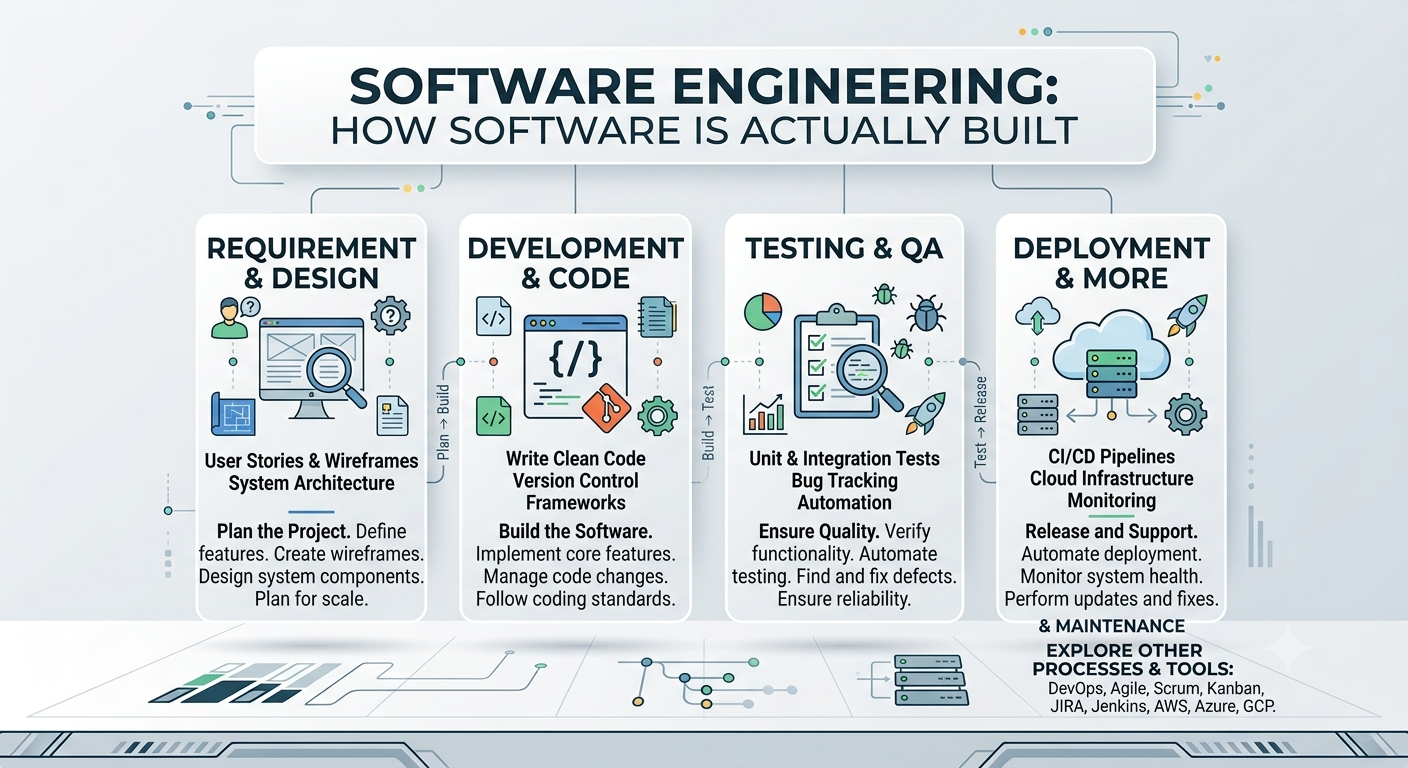
Software Engineering concentrates on building reliable software through engineering processes. Requirements, architecture, testing, version control, software quality, DevOps and project management are common themes.
Cybersecurity
Cybersecurity programs cover areas such as network security, cryptography, digital forensics, secure development, security operations, risk and incident response.
Data Science
Data Science combines programming, statistics and data analysis. Students may study Python, databases, data visualisation, machine learning, data mining, predictive modelling and data engineering.
Artificial Intelligence and Machine Learning
AI-focused study can cover machine learning, deep learning, natural language processing, computer vision, neural networks, intelligent systems and AI ethics.
Information Systems
Information Systems connects technology with organisations and business processes. Topics may include business analysis, enterprise systems, databases, systems design, governance and information management.
4. Undergraduate and Postgraduate Pathways
The AQF provides a useful framework for understanding different study levels. A simplified computing pathway can be:
Bachelor Degree → Graduate Certificate/Diploma → Master's → Doctoral Research
A bachelor's degree is generally the main entry point for students beginning higher education in computing. It combines foundational knowledge with practical work.
A Graduate Certificate can provide a shorter postgraduate route into a particular field. A Graduate Diploma can provide broader postgraduate study. A Master's can provide advanced professional or specialised study, while a doctoral degree is primarily a research pathway.
Not every student needs to complete every level. The appropriate pathway depends on previous education, career goals and the type of work being targeted.
5. What Subjects Do CS and IT Students Study?
The best way to understand a degree is to inspect its subjects.
Programming
Programming teaches students to translate requirements into executable software. Depending on the course, languages can include Python, Java, JavaScript, C, C++, C# and others.
Algorithms and data structures
These subjects explain how computational problems can be represented and solved efficiently. Arrays, linked lists, trees, graphs, sorting, searching and algorithmic complexity are common concepts.
Databases
Database subjects explain how information is modelled, stored and queried. SQL, relational modelling, normalisation, transactions and data integrity are common topics.
Networking
Networking introduces IP addressing, routing, switching, protocols, network architecture, wireless communication and security.
Operating systems
Students can explore processes, memory, storage, scheduling, concurrency and system resources.
Software engineering
Software engineering moves beyond writing code. Requirements, architecture, testing, version control, code review, CI/CD and maintenance become part of the development process.
Cybersecurity
Security subjects examine threats, controls, authentication, cryptography, secure architectures and incident response.
Mathematics and statistics
Mathematics is particularly important for algorithms, machine learning, data science, graphics, cryptography and other specialised areas.
6. Choosing a CS or IT Specialisation
The appropriate specialisation depends on interests, strengths and the type of problems a student enjoys solving.
Software and programming
A programming-focused path suits students who enjoy building applications and solving technical problems. Potential roles include software developer, software engineer, backend developer, frontend developer, mobile developer and automation engineer.
Cybersecurity
Cybersecurity can suit students interested in networks, investigation, defensive engineering and security problems. Possible directions include security analyst, security engineer, penetration tester, SOC analyst and digital forensics.
Data science
Data science suits students who enjoy statistics, programming and finding patterns in data. Potential roles include data analyst, data scientist, data engineer and machine learning specialist.
Artificial intelligence
AI and machine learning are relevant to students interested in mathematical modelling, intelligent systems and predictive algorithms.
Information systems
Information systems can suit students interested in the connection between technology, people and organisational processes. Possible directions include business analysis, systems analysis and technology consulting.
7. Career Scope of CS and IT in Australia
The career scope of computing is broad because digital systems are embedded across many industries.
Jobs and Skills Australia projects continued growth in Professional occupations over the decade to May 2035. Its current projections show Professionals increasing by 845,300 people, or 21.4%, between May 2025 and May 2035. JSA also cautions that projections are indicative models based on assumptions rather than precise forecasts. citeturn0search2turn0search4
For Software and Applications Programmers, the February 2026 JSA occupation profile reports about 203,200 employed people and annual employment growth of 13,700. It reports median full-time weekly earnings of $2,537 using its cited 2025 earnings data. These are occupation-level statistics and are not a guarantee for graduates or individual applicants. citeturn0search0
The same profile shows that software professionals work across industries including Professional, Scientific and Technical Services, Financial and Insurance Services, and Public Administration and Safety. citeturn0search0
Potential career directions include:
- Software development
- Software engineering
- Data analysis
- Data engineering
- Cybersecurity
- Cloud engineering
- DevOps
- Network engineering
- Systems analysis
- Business analysis
- IT consulting
- Database administration
- AI and machine learning
- Research
A qualification does not guarantee a particular outcome. The strongest career strategy combines formal education with practical skills, projects, communication and relevant experience.
8. What Skills Matter Beyond the Degree?
A degree provides a foundation, but the degree title alone does not demonstrate technical ability.
Programming ability
Students should be able to build, read and debug real programs rather than only memorise syntax.
Problem solving
Real technical work often involves incomplete requirements and unfamiliar problems.
Communication
Developers and IT professionals work with technical and non-technical stakeholders. Explaining a solution clearly is part of engineering work.
Version control
Git is a practical professional skill for software development and collaborative work.
Databases
SQL and data modelling are useful across software, analytics, enterprise and data roles.
Cloud literacy
Basic knowledge of cloud infrastructure complements software, data, networking and systems skills.
Security awareness
Security should not be treated as the responsibility of cybersecurity specialists alone.
Projects
Projects demonstrate that theory can be turned into working systems.
9. Why CS and IT Assignments Can Be Challenging
Computing assignments often combine multiple skills at once.
A programming assignment may require problem interpretation, algorithm design, coding, testing, debugging and documentation.
A networking assignment may require topology design, IP addressing, protocol analysis and security reasoning.
A database assignment may involve entity-relationship modelling, normalisation, SQL, query design and data integrity.
A software engineering project can involve requirements, user stories, UML, architecture, Git, testing and documentation.
This explains why searches for CS Assignment Help Australia, IT Assignment Help Australia, programming assignment help and Australia University Assignment Help often relate to understanding concepts and processes rather than simply producing a final answer.
10. CS Assignment Help Australia: Common Academic Topics
A broad CS Assignment Help Australia resource can cover many areas.
Programming assignment help
Typical tasks include algorithms, object-oriented programming, data structures, debugging and application development.
Database assignment help
Students may work with SQL queries, joins, aggregation, normalisation, transactions and relational modelling.
Networking assignment help
Common topics include TCP/IP, routing, subnetting, wireless networking, protocol analysis and network security.
Software engineering assignment help
Students may need to understand requirements engineering, UML, architecture, Agile methods, testing and version control.
Cybersecurity assignment help
Topics can include authentication, cryptography, vulnerabilities, digital forensics and incident response.
AI and machine learning assignment help
Assignments may cover regression, classification, clustering, neural networks, preprocessing and evaluation.
Cloud computing assignment help
Students can encounter virtual machines, containers, storage, networking, scalability and cloud security.
The important academic skill across these topics is being able to explain why an approach works, not merely reproduce a result.
11. Australia University Assignment Help: A Better Study Process
Technical coursework becomes more manageable when the same workflow is used repeatedly.
Step 1: Understand the question
Determine whether the assignment asks for explanation, implementation, comparison, design, experiment, evaluation or research.
Step 2: Identify the concepts
List the technical topics required before starting the solution.
Step 3: Design before implementing
Use pseudocode, diagrams, architecture, a data model or a test plan where appropriate.
Step 4: Implement incrementally
Build and test one component at a time.
Step 5: Test deliberately
Use normal inputs, edge cases and invalid inputs.
Step 6: Explain decisions
A strong report explains why an approach was selected and what limitations remain.
This process is useful whether the work involves code, databases, networks, security or software architecture.
12. Computer Science Projects and Portfolio Building
A practical project can demonstrate skills that a transcript cannot show by itself.
Examples include:
Web application + API + database + authentication + cloud deployment
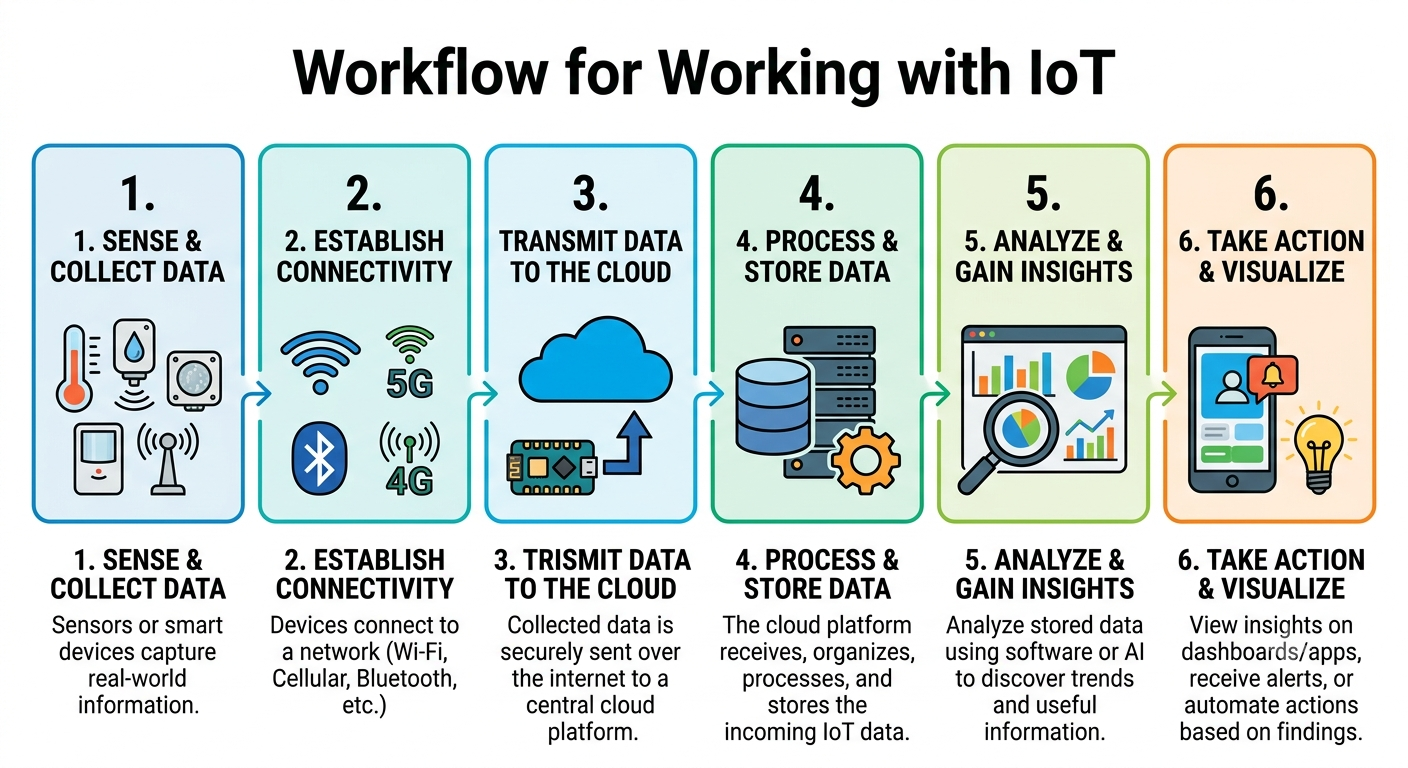
IoT sensor + Python + MQTT + database + dashboard
Dataset + Python + SQL + visualisation + machine learning
Security lab + network monitoring + log analysis + technical report
A strong portfolio project should answer five questions:
- What problem was solved?
- Why were these technologies selected?
- How was the system designed?
- How was it tested?
- What would be improved in a second version?
The project does not need to be enormous. A small complete system is often more useful than a large unfinished idea.
13. Do CS and IT Courses Require Strong Mathematics?
The answer depends on the course and specialisation.
Mathematics tends to be more prominent in algorithms, machine learning, artificial intelligence, cryptography, computer graphics and data science.
Some applied IT pathways may place more emphasis on systems, infrastructure, enterprise applications or technology management.
Even when advanced mathematics is not central to a chosen career, mathematical and statistical literacy can improve problem solving and technical reasoning.
14. Is Coding Necessary for an IT Degree?
Not every IT career requires advanced programming, but programming literacy is increasingly useful.
Python can automate administration and data tasks. SQL can retrieve and analyse information. Shell scripting can automate servers. JavaScript can help explain web applications. Infrastructure-as-code tools also require programming-style thinking.
The practical question is therefore not whether coding matters, but how much coding is appropriate for the chosen pathway.
15. The Role of AI in CS and IT Education
AI is changing the technology industry and the way computing students work.
Students may encounter AI as a subject, development tool, research topic or component of applications.
This makes foundational knowledge more important, not less. Understanding algorithms, databases, networks, software engineering and security allows students to evaluate AI-generated output rather than accepting it automatically.
AI tools can generate code quickly, but students still need to understand requirements, correctness, security, testing, architecture and performance.
The emerging skill is not simply producing technical output. It is reviewing, testing and reasoning about technical output.
16. How to Choose a CS or IT Course in Australia
Instead of comparing universities only by ranking, compare the actual curriculum.
Core subjects
Check whether the course teaches programming, algorithms, databases, networks and software engineering.
Specialisations
Look for pathways that match genuine interests.
Practical projects
Check how much project-based work appears in later years.
Industry exposure
Where available, compare internships, placements, industry projects and other applied opportunities.
Assessment style
Some courses rely heavily on examinations; others use projects, laboratories and continuous assessment.
Postgraduate pathways
Check whether the degree supports later specialisation if plans change.
Total cost and practical factors
Tuition is only one consideration. Location, living costs, delivery mode, timetable and available facilities also matter.
The strongest choice is therefore a course that fits the student's academic interests, practical goals and circumstances rather than a generic ranking.
17. Career Paths After a CS or IT Degree
Software development
Building applications, APIs, platforms and services.
Software engineering
Designing and maintaining reliable software systems using engineering practices.
Data and analytics
Turning organisational data into reports, insights and predictive models.
Cybersecurity
Protecting applications, networks, infrastructure and information.
Cloud and infrastructure
Designing, deploying and operating modern infrastructure.
Networking
Building and maintaining communication systems.
Systems analysis
Translating organisational problems into technology requirements.
Business analysis
Connecting business processes with technology solutions.
IT consulting
Helping organisations select, implement and improve technology systems.
Research
Investigating algorithms, systems, AI, security and other computing problems.
18. What the Australian Job Market Suggests
Employment statistics need to be interpreted carefully. A projected increase in an occupation does not mean every graduate will find a role immediately, and a qualification alone does not guarantee employment.
Nevertheless, current official data provides useful context. Jobs and Skills Australia projects continued growth in Professional occupations through 2035, while its software-programming profile reports a substantial existing workforce and measurable annual employment growth. citeturn0search0turn0search2
JSA also notes that its ten-year projections are based on current trends and assumptions and should be treated as indicative rather than precise predictions. citeturn0search4
The practical conclusion is that computing skills participate in a labour market where digital technology is used across many industries. Students should prepare for that market with a combination of qualification, technical competence, projects, communication and continuous learning.
19. A Long-Term Skill Strategy for Computing Students
Technology changes quickly. A particular framework, programming language or cloud service may become less important over time.
Foundational skills generally have a longer lifespan:
- Problem solving
- Algorithms
- Data structures
- Databases
- Networking
- Software design
- Security principles
- Testing
- Version control
- Communication
A student who learns only one tool becomes dependent on that tool. A student who understands the concepts behind the tool can learn new technologies more easily.
This matters especially in cloud computing, AI and cybersecurity, where platforms and tools change rapidly.
20. A Practical Weekly Study Plan
A simple routine can make technical courses easier to manage.
Learn the concept
Read the lecture material and identify unfamiliar terminology.
Reproduce the example
Run the provided code or recreate the demonstrated architecture.
Change the example
Modify inputs, parameters or components and observe what happens.
Build a small variation
Create an independent version of the exercise.
Test it
Introduce edge cases and invalid inputs.
Explain it
Write a short explanation of how the solution works.
Review it later
Return to the topic after several days instead of relying on one study session.
This process turns passive reading into practical understanding.
21. Final Takeaways
The phrase CS and IT courses in Australia covers a large educational landscape rather than one degree.
Computer Science generally emphasises computational foundations and problem solving. Information Technology focuses strongly on applying and managing technology systems. Software Engineering focuses on building reliable software. Cybersecurity focuses on protecting systems and information. Data Science focuses on extracting value from data. Artificial Intelligence focuses on intelligent computational systems. Information Systems connects technology with organisational needs.
These fields overlap, and modern careers frequently cross traditional boundaries.
For students comparing Computer Science courses Australia, IT courses Australia, Software Engineering, Cybersecurity, Data Science and AI programs, useful comparison criteria include curriculum, specialisations, project work, assessment style, industry exposure, future study options and personal interests.
Current official sources show that Australian IT and computing study spans many specialisations and that software-related occupations form a substantial part of the labour market. Jobs and Skills Australia also projects continued growth across Professional occupations, while cautioning that projections are indicative rather than guarantees. citeturn0search0turn0search2turn0search5
For students searching for CS Assignment Help Australia, Australia University Assignment Help, IT Assignment Help Australia, programming assignment help, database assignment help, networking assignment help or software engineering assignment help, the same principle applies: understanding the underlying concepts is more valuable than memorising isolated answers.
The strongest computing education combines:
Theory → Practice → Projects → Problem Solving → Communication → Continuous Learning
That combination turns a computing qualification into a foundation for adapting to a technology industry that will continue to change.
Quick Reference: CS & IT Study Areas in Australia
| Study area | Common focus | Example career directions | |---|---|---| | Computer Science | Algorithms, programming, systems, computing theory | Software developer, systems engineer, technical specialist | | Information Technology | Applied technology, infrastructure, systems | IT specialist, systems analyst, technology consultant | | Software Engineering | Software architecture, testing, development processes | Software engineer, developer, QA/automation | | Cybersecurity | Security, networks, forensics, risk | Security analyst, security engineer, consultant | | Data Science | Statistics, programming, analytics | Data analyst, data scientist, data engineer | | Artificial Intelligence | Machine learning, intelligent systems | ML engineer, AI specialist, research roles | | Information Systems | Technology and business processes | Business analyst, systems analyst, IT consultant | | Networking | Communication systems and infrastructure | Network engineer, infrastructure specialist | | Cloud Computing | Cloud infrastructure, deployment, scalability | Cloud engineer, DevOps/infrastructure roles |
KnowledgeBoost Perspective
The biggest advantage of studying computing is not learning one programming language or one software platform. It is learning how to think about technology.
Once the foundations are strong, a student can move from one programming language to another, from traditional servers to cloud platforms, from conventional analytics to machine learning, or from basic networking to advanced infrastructure.
The tools will keep changing.
The ability to understand problems, design systems, build solutions, test them and keep learning is what remains valuable.